
Table of contents:
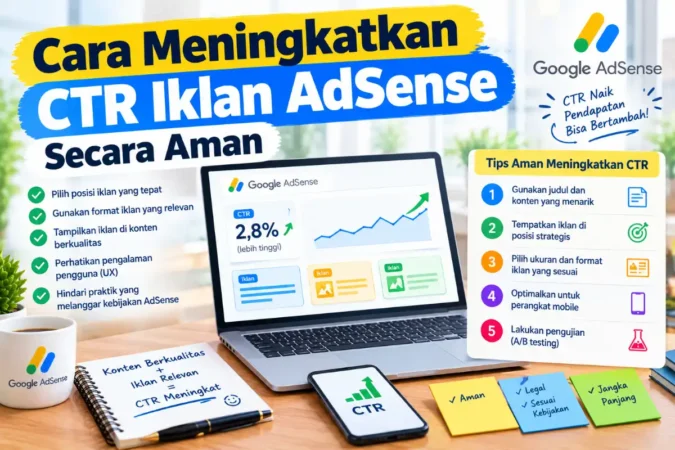
Increasing your AdSense ad CTR (Click-Through Rate) can help improve your website’s advertising revenue, but there is a clear line between legitimate optimization and practices that violate Google’s policies — and violating those policies can put your account at risk of suspension. This guide explains effective ways to increase CTR while staying compliant with official AdSense policies.
Important to understand before optimizing: Google AdSense explicitly prohibits advertisements placed inside floating boxes, arrows or visual elements designed to draw attention to ads, formatting ads so they cannot be distinguished from content, misleading labels above ads, and calls to action such as “click this ad” or “support us.” Policy violations can result in AdSense account restrictions or suspension.
ProhibitedFloating ad boxes, directional arrows, misleading labels
AllowedAdjusting colors and sizes as long as ads remain clearly identifiable
RequiredSufficient content should be visible above the fold, not just advertisements
Strategic and Safe Ad Placement
- Place ads where visitors naturally look. Areas near the top of the page or directly below the main content can be effective without relying on tactics that may violate policy.
- Make sure sufficient content appears above the fold. Google does not allow layouts that push the main content below the fold so that visitors initially see mostly advertisements.
- Avoid intrusive floating or sticky ad implementations. Besides potentially harming the user experience, certain floating-box implementations are specifically prohibited under AdSense ad placement policies.
- Keep ads away from navigation elements. Ads placed too close to menus, buttons, or other interactive elements may cause accidental clicks, which can create policy concerns.
Limits on Ad Format Customization
| Allowed | Prohibited |
|---|---|
| Adjusting ad size to fit the page layout | Formatting ads so they cannot be distinguished from the surrounding content |
| Adjusting the ad background color to complement the website design | Using images or arrows specifically designed to direct attention toward ads |
| Choosing text, image, or responsive ad formats where available | Using misleading labels above ad units instead of appropriate advertising labels |
| Placing ads naturally in the sidebar or within content | Using prohibited floating-box implementations to display advertisements |
Publish Quality Content to Support Healthy CTR
Genuinely informative and relevant content remains the foundation of a healthy and sustainable CTR. Understand your readers’ needs, use a clear structure with useful subheadings and concise paragraphs, and make sure your content is relevant to your audience’s interests. For example, technology content may naturally attract software or gadget advertisements that are relevant to readers interested in the same topic.
Policy-Compliant A/B Testing
- Test reasonable placement variations. Compare ad performance above the content, within the content, or in the sidebar, as long as the implementation does not interfere with the user experience or violate advertising policies.
- Test ad formats rather than manipulative visual tricks. Compare available text, image, or responsive ad formats instead of relying on visual elements designed to force users’ attention toward advertisements.
- Use data from Google Analytics and your AdSense dashboard. Monitor CTR, RPM, and Active View Viewability where available to evaluate the actual impact of each change you test.
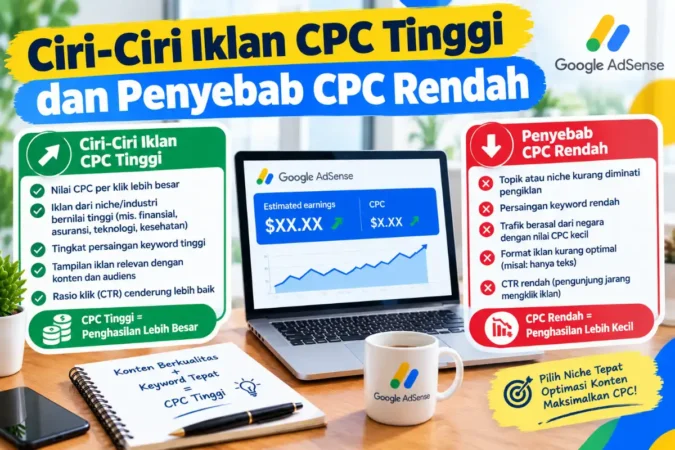
Want to learn more about the characteristics of high-CPC ads and how to maximize their potential?
Read: Characteristics of High-CPC Ads
Read also: AdSense Ad Sizes with High CPC Potential and High-CPC AdSense Keyword List to develop a more comprehensive website monetization strategy.
FAQ
1. Can I adjust ad colors so they match my website design?
You can customize available ad styling options where permitted, including certain colors and sizes, but advertisements must remain clearly distinguishable from your website’s content. Formatting an ad so that it looks like ordinary editorial content can violate AdSense policies.
2. Are floating or sticky ads always prohibited?
Ad implementations that use prohibited floating boxes are not allowed under applicable AdSense ad placement policies. Sticky or anchored formats should be evaluated separately based on Google’s current policy requirements and implementation guidelines.
3. Can I write “Click this ad to support us”?
No. Google prohibits language that encourages users to click ads, including direct requests such as this. Ad clicks should result from genuine user interest rather than publisher encouragement.
4. What are the risks if my ad placement violates AdSense policies?
Depending on the nature and severity of the violation, consequences may include warnings, ad serving restrictions, limited ad serving, or suspension or termination of an AdSense account.
5. Is A/B testing ad colors and positions allowed?
Testing can be appropriate as long as the variations remain within Google’s policies. Testing reasonable differences in placement or size is different from testing elements specifically designed to manipulate or force user attention toward advertisements.
Conclusion
Sustainably increasing AdSense ad CTR does not require risky tactics such as prohibited floating boxes or visual elements designed to direct attention toward advertisements. A better long-term approach is to combine strategic and reasonable ad placement, appropriate ad formats, and genuinely relevant, high-quality content.
Before implementing any optimization strategy, always evaluate it against the latest official AdSense policies. If you are unsure whether a particular tactic is compliant, it is safer to avoid it rather than risk the AdSense account you have worked hard to build.